Introduction
Fire safety isn’t just a legal obligation — it’s a business-critical practice that protects people, assets and continuity. For companies in Vladivostok and Primorsky Krai the challenges range from port and warehouse operations to public-facing services and older wooden buildings. This guide explains the practical and legal essentials: the fire-technical minimum (ПТМ), training and certification requirements, duties of responsible persons, evacuation procedures, recent regulatory considerations, and concrete steps you can take today.
Legal and regulatory overview (what to watch for)
— Russian fire-safety requirements are set by federal legislation and technical regulations and are implemented at regional level by МЧС (Ministry of Emergency Situations) and local authorities.
— Employers must ensure workplace fire safety: staff training, appropriate equipment, evacuation plans and records.
— Non‑compliance can lead to administrative fines, orders to suspend activities and increased liability in case of incidents.
— Stay updated: regional updates or sector-specific rules (transport, healthcare, education, catering, port logistics) can impose additional obligations. Check the website or contact Главное управление МЧС России по Приморскому краю (the Primorsky Krai branch of МЧС) for Vladivostok-specific updates.
Who needs training and what is ПТМ (fire-technical minimum)
— ПТМ (пожарно‑технический минимум) — mandatory initial training course for persons responsible for fire safety, supervisors, and certain operational staff.
— Typical groups requiring training:
— Heads of organizations and their deputies.
— Designated fire-safety officers (ответственные за пожарную безопасность).
— Supervisors, security personnel, maintenance and shift workers, kitchen staff (in catering), and employees performing hot work.
— PTM covers basics of fire prevention, use of extinguishers, organization of evacuation, and legal responsibilities; courses include theoretical and practical modules.
Training and certification — practical requirements
— Use accredited training centers or providers approved by regional authorities; verify provider accreditation and instructor qualifications.
— Training components:
— Initial instruction at hiring.
— Full PTM course for responsible persons.
— Periodic refresher courses — frequency depends on category and company specifics (check regional rules; commonly annual briefings and multi‑year recertification cycles for PTM).
— Practical fire‑extinguisher and evacuation drills.
— Documentation:
— Keep signed training records, attendance sheets, copies of certificates.
— Maintain a training matrix showing who is certified and when re-training is due.
Responsibilities of safety officers and company management
— Management duties:
— Appoint accountable persons in writing.
— Approve and maintain fire safety rules and evacuation plans.
— Provide funding for equipment, training and inspections.
— Fire-safety officer (ответственный за пожарную безопасность) duties:
— Organize and conduct fire briefings and PTM.
— Maintain fire-fighting equipment and first-aid resources.
— Ensure evacuation routes and exits are unobstructed and signed.
— Conduct regular inspections and report deficiencies.
— Coordinate with МЧС and responding services.
— Keep records of training, drills, maintenance and incidents.
— Maintenance teams:
— Regular inspection of electrical systems, heating, and fire-detection systems.
— Monthly checks of portable extinguishers and annual professional servicing.
Evacuation procedures — clear, practical steps
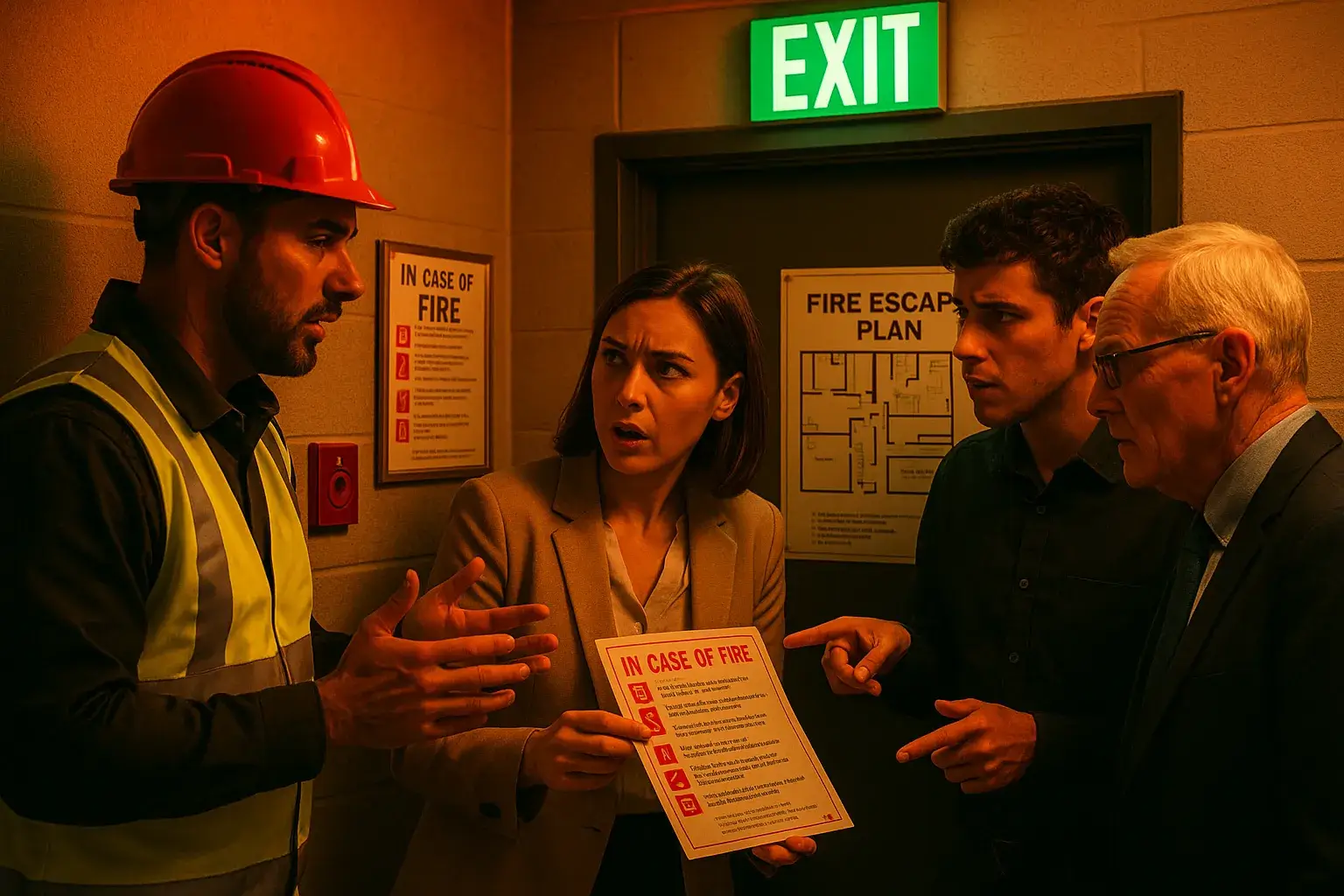
— Prepare and publish an evacuation plan for each building/floor with:
— Primary and secondary escape routes (marked and free of obstacles).
— Designated assembly points (неприкосновенные места сбора) outside hazard zones.
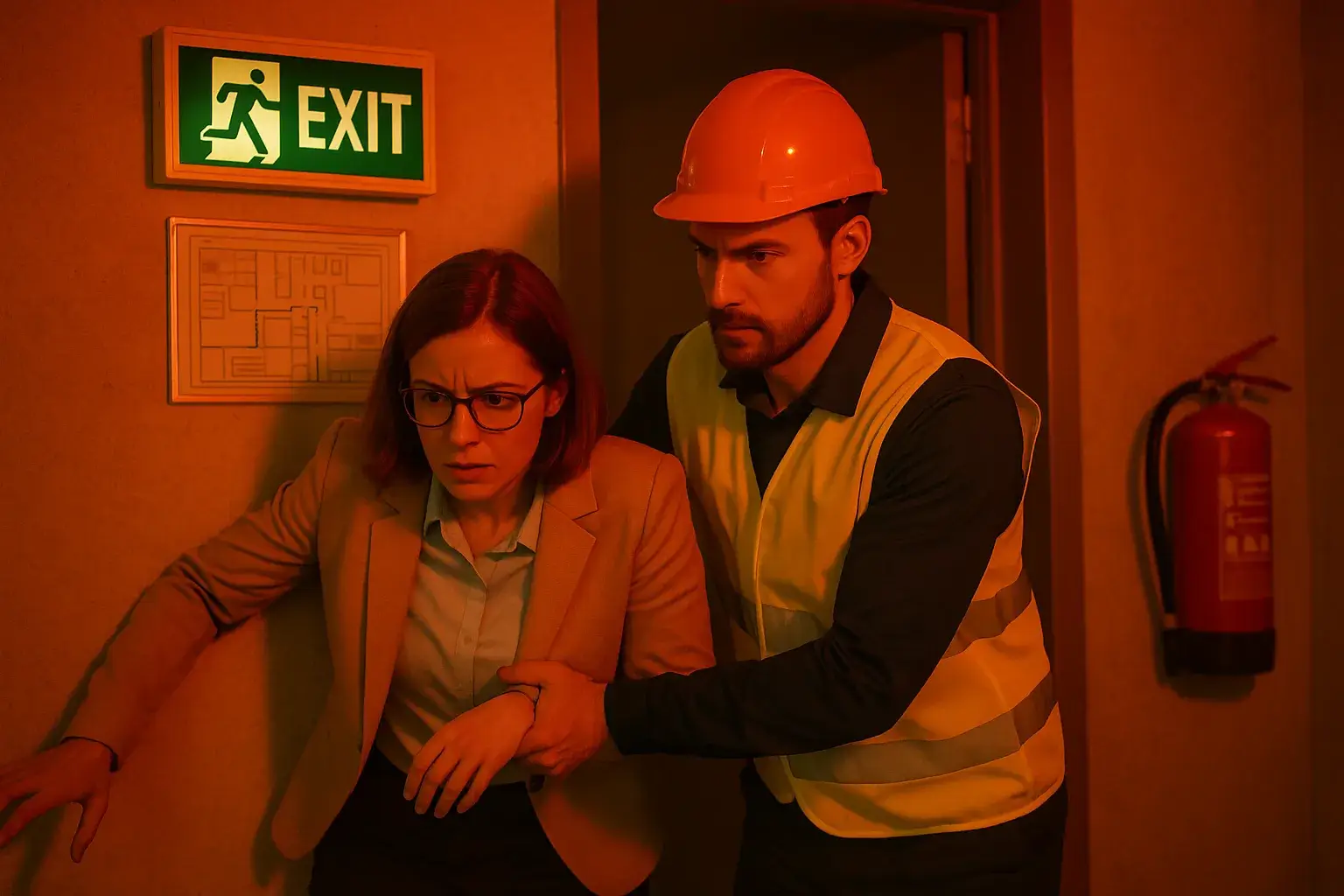
— Roles: fire-watchers, floor captains, first-aid responders, personnel responsible for assisting people with reduced mobility.
— Alarm and response:
— Alarm activation → immediate stop of hazardous operations where safe → orderly evacuation.
— Do not use elevators during evacuation.
— Floor captains check rooms, close doors behind them and report headcounts at assembly points.
— Provide roll-call and notify emergency responders of missing persons.
— Post‑evacuation:
— Head of organization or responsible person liaises with МЧС on site.
— Do not re-enter until declared safe by emergency services.
— Practice regularly: conduct full-scale drills at least annually or more often for high-risk sites; short tabletop exercises quarterly.
Practical equipment and on-site safety advice
— Fire-fighting equipment:
—